Orbit AI connects the tools a business already runs on and lets it build agents that handle the repetitive operational work between them — research a lead, update the CRM, draft the follow-up — with a person approving the real actions before they happen.
Every business has the same handful of tasks eating an afternoon: research an inbound lead, update the CRM, draft a personalized reply, notify the right Slack channel. None of it is hard. All of it is repetitive enough that a person doing it by hand is a waste of a person.
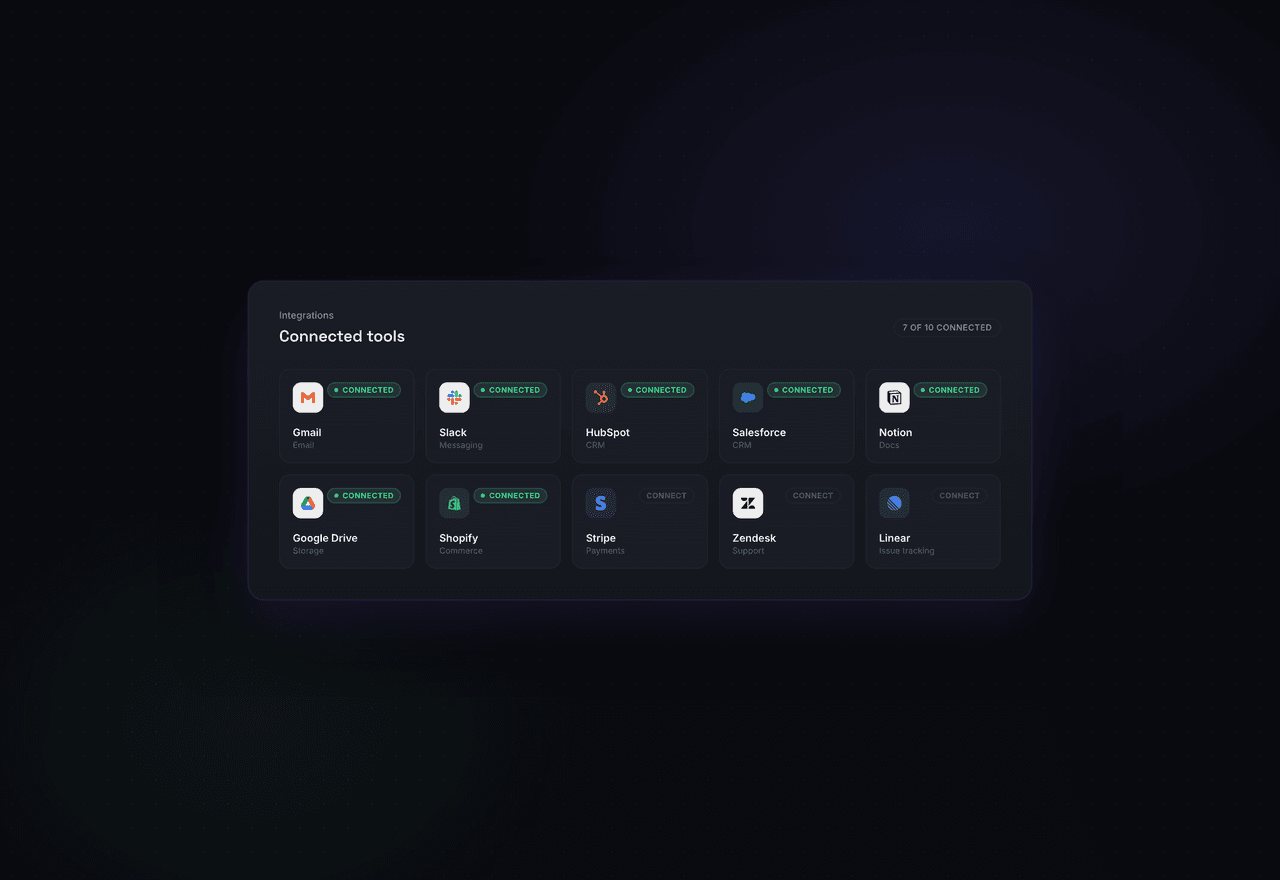
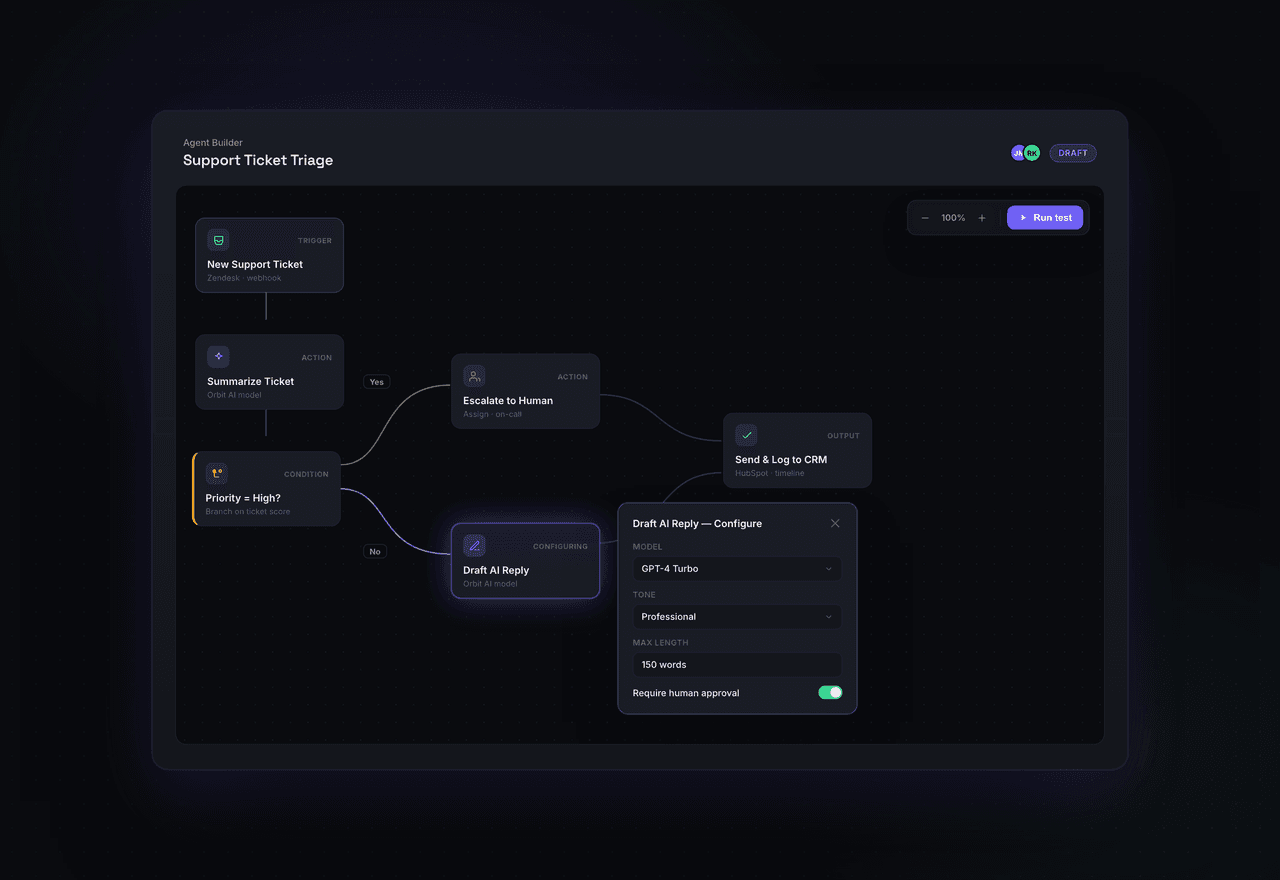
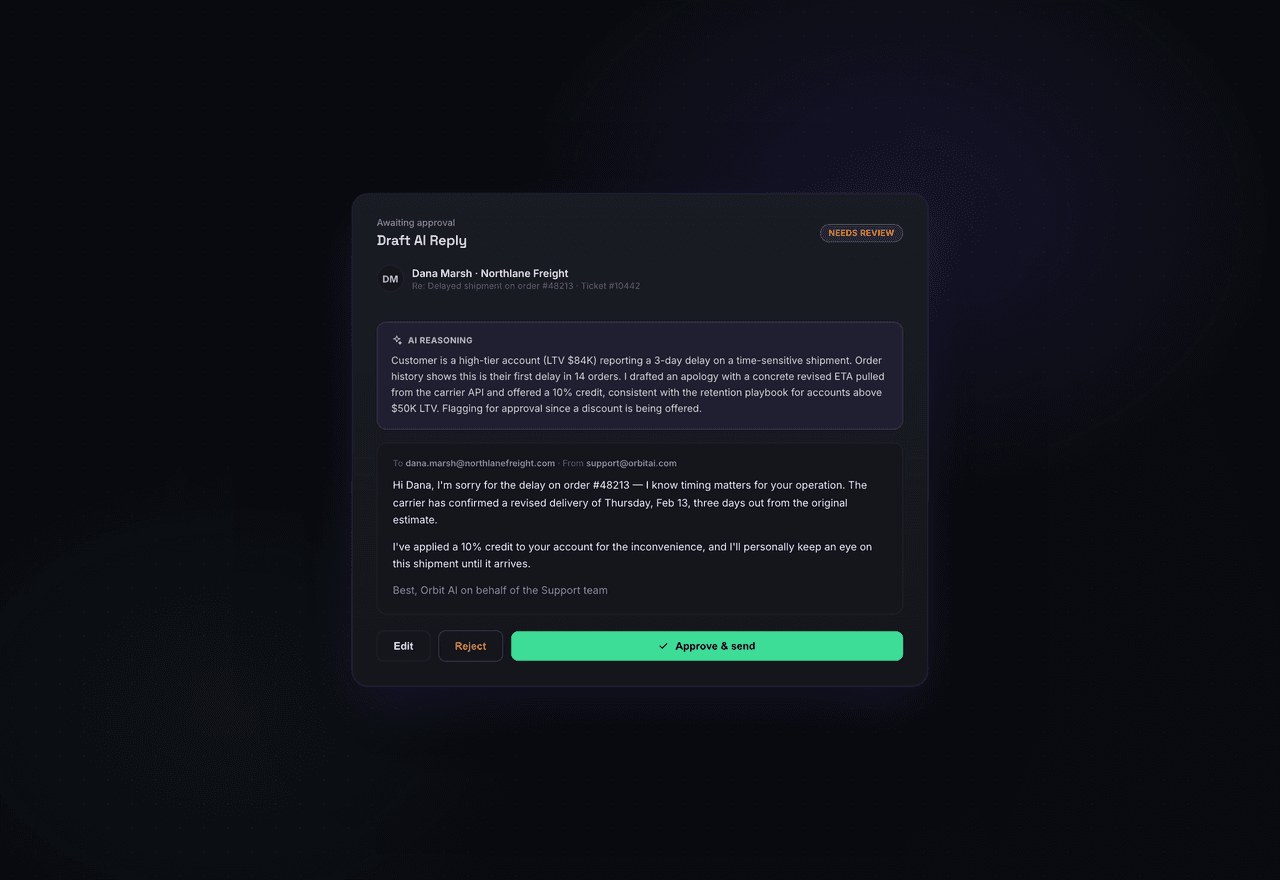
Orbit AI is built around a real workflow canvas, not a chat box — a trigger, a chain of actions, a conditional branch, an output, configured visually and connected to the tools already in use (Gmail, Slack, HubSpot, Salesforce, Notion) rather than a closed ecosystem. Every run is traced step by step, and every action that actually does something — sends an email, updates a record — waits on a human approval first. The AI drafts and reasons; a person still decides.
We designed and built Orbit AI in house, end to end: the agent builder, the integrations layer, execution analytics and the approval queue. It's deliberately a serious operational tool, not a demo chatbot with a landing page around it.
A real workflow canvas — trigger, actions, a conditional branch, an output — built and configured without writing code.
Connects to the tools already in use — Gmail, Slack, HubSpot, Salesforce, Notion and more — not a walled garden.
The AI drafts the action and shows its reasoning; a person approves, edits or rejects before anything sends.
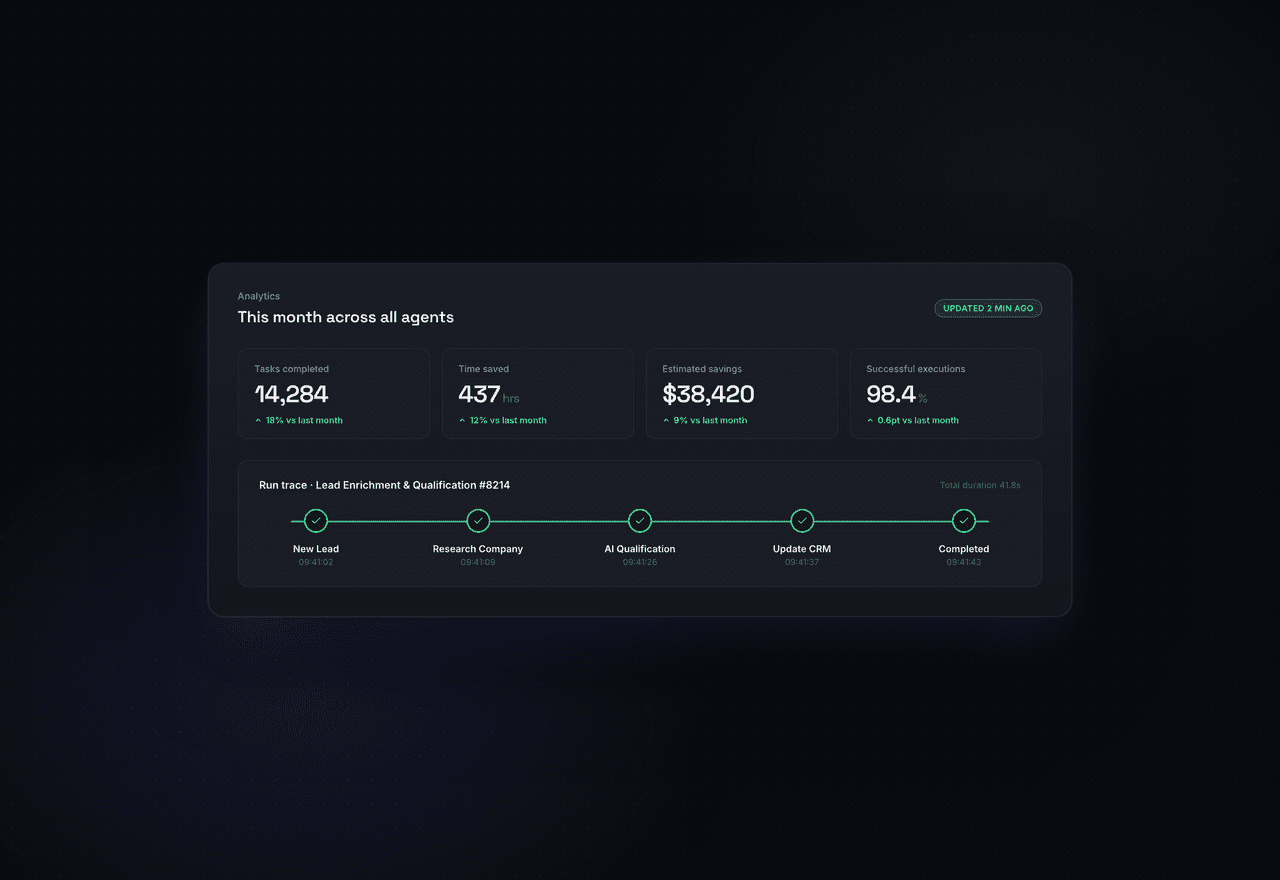
Every agent run traced step by step, so a failure is a two-minute read, not a guessing game.
Tasks completed, hours saved and estimated cost impact, tracked per agent — the number a founder actually asks for.
A single dark, technical design language carried from the marketing hero through every in-app surface.
“The trust problem was the whole design brief — nobody wants an AI system quietly sending emails on their behalf. The approval queue is the actual product.”