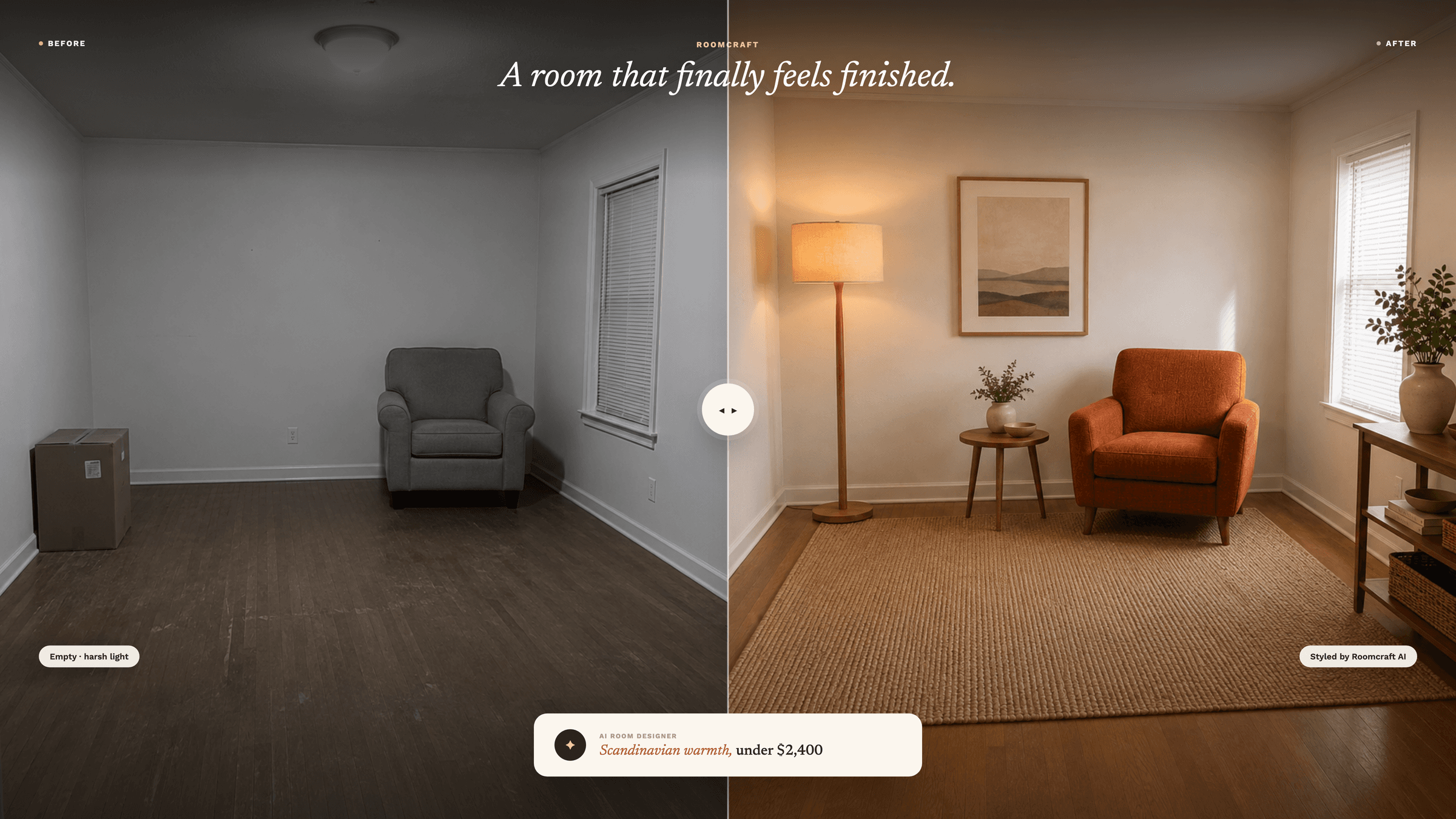
Roomcraft is a multi-vendor furniture marketplace built around an AI room designer — upload a photo of your space, get a styled plan built from real, purchasable pieces and a running budget, then check out once across every independent maker in the cart.
Furniture marketplaces are good at browsing and bad at the actual decision. A search for "lounge chair" returns a wall of thumbnails with nothing to say which one belongs in a specific room, next to a specific window, under a specific budget. So people screenshot a few options, guess, and either return the piece or live with a room that never quite comes together — while the maker who built the chair has no idea any of that happened.
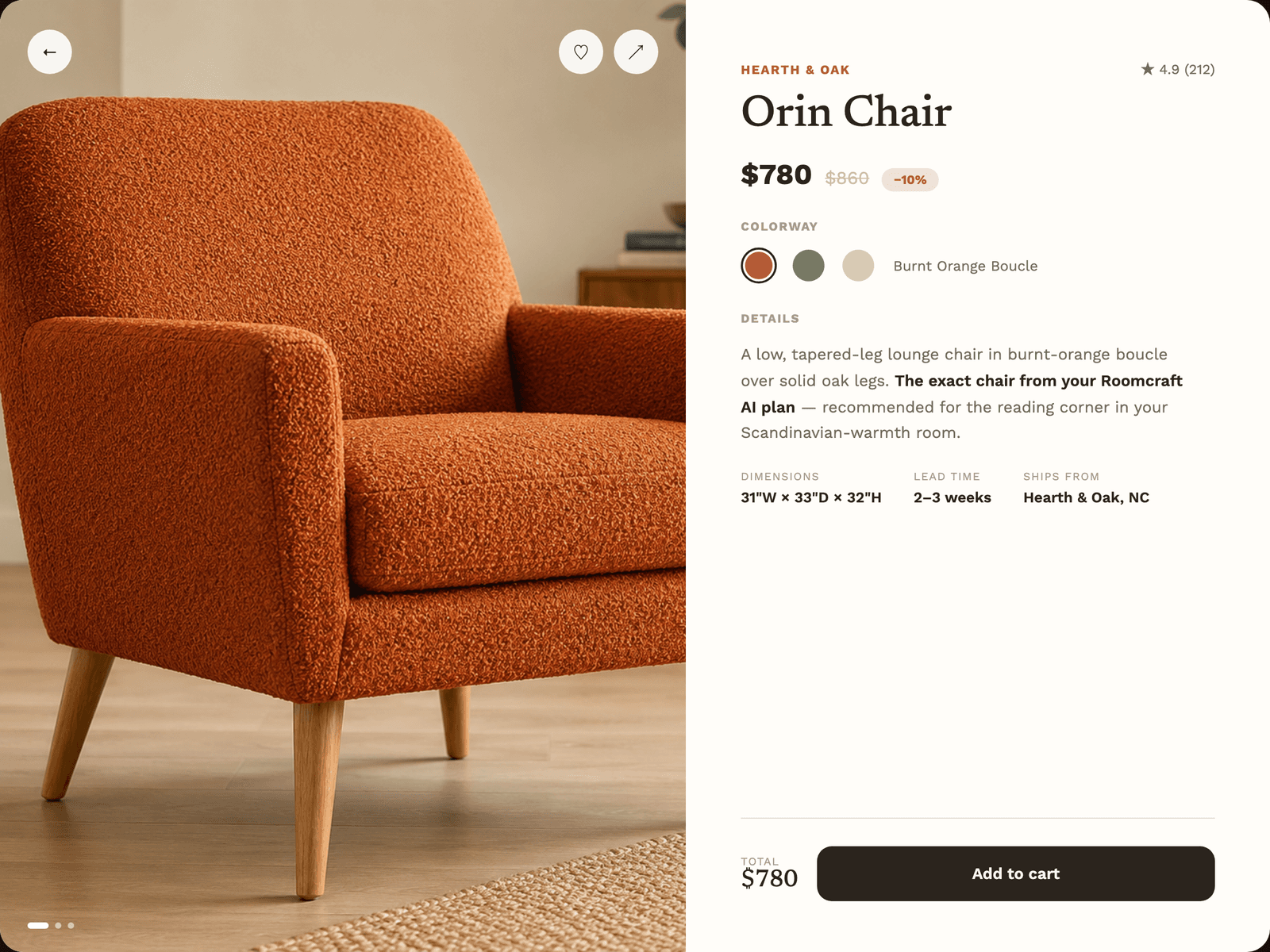
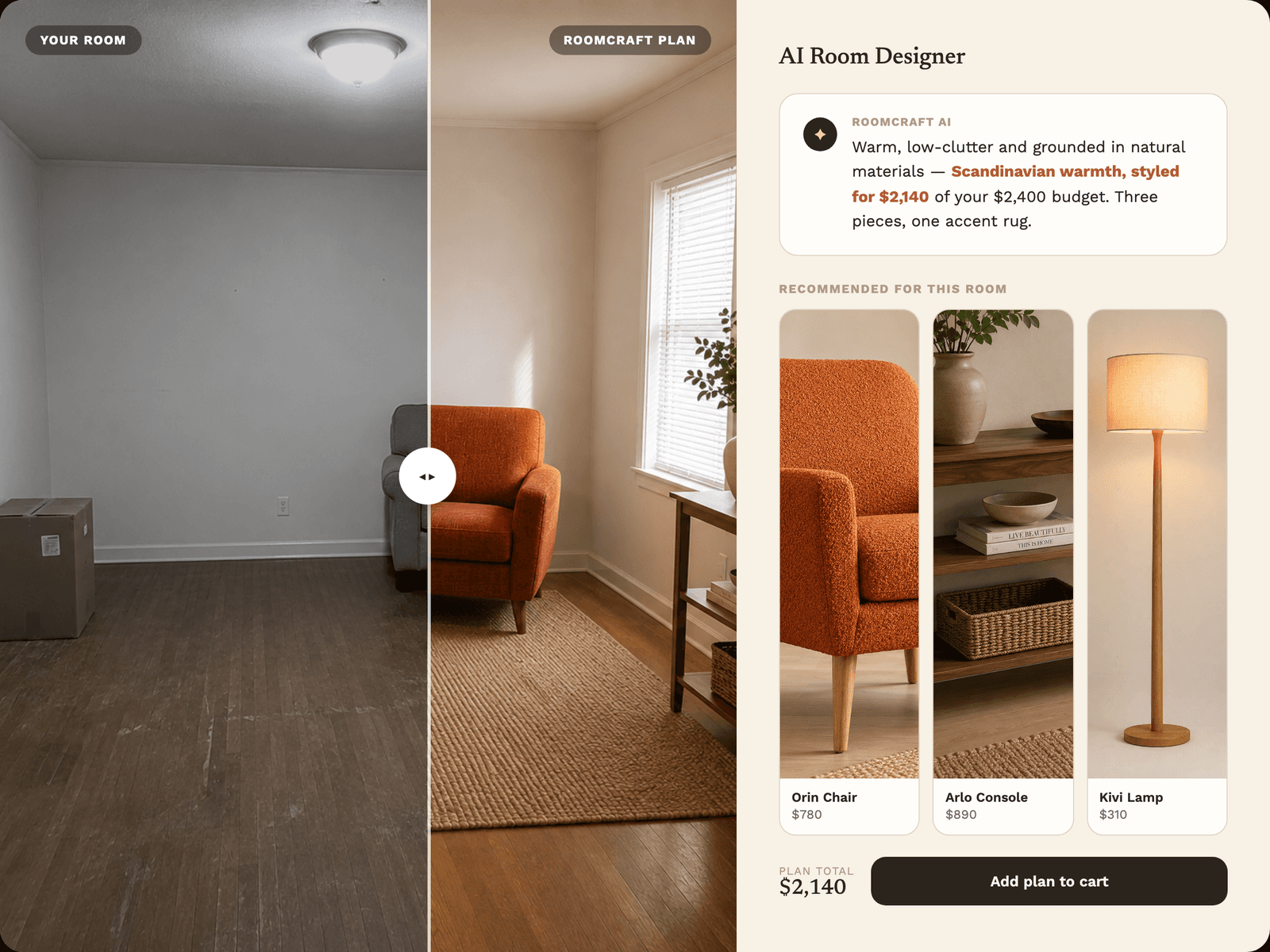
Roomcraft starts from the room, not the search bar. Upload a photo and the AI designer returns an actual plan — a style direction, a small number of real pieces pulled from the live catalog, and a running total against the budget you gave it — the same chair you'd then find on its own product page, from the maker who actually built it. Behind the storefront, Stripe Connect gives every independent maker their own payout account, so the customer checks out once, across makers, in a single order.
We designed and built Roomcraft in house, end to end. This phase covers the customer-facing shopping app — catalog, product detail, and the AI room designer — plus a full seller dashboard for revenue, orders and inventory. A maker onboarding flow and admin console are the deliberate next phase.
Upload a photo of your room and get a styled plan built from real, in-stock pieces — a look, not just a mood board, with a running total against your budget.
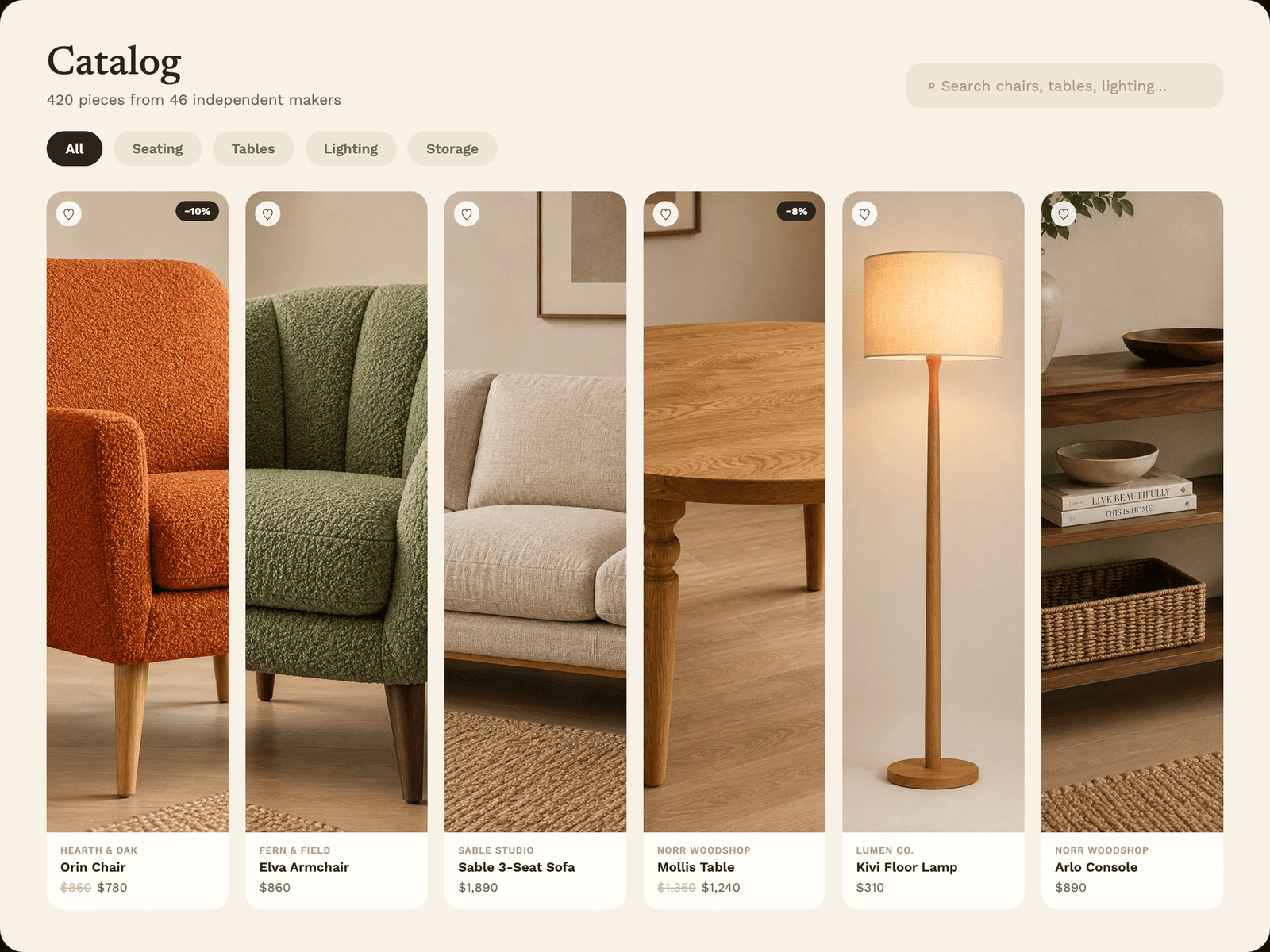
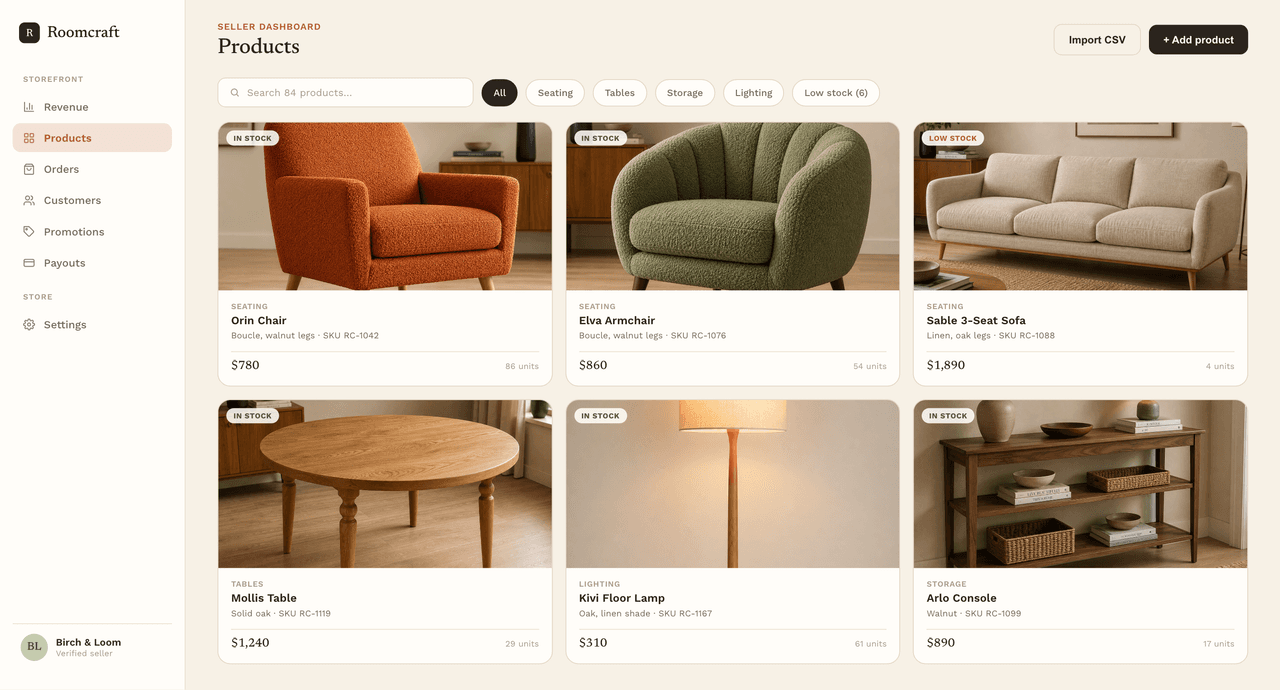
Hundreds of pieces from independent makers, browsable by category and search — none of it drop-shipped or generic.
Real lifestyle photography, maker info, colorways and lead times on every listing, not a stock photo on a white background.
Stripe Connect gives each maker their own payout account; the customer checks out once, across makers, in a single order.
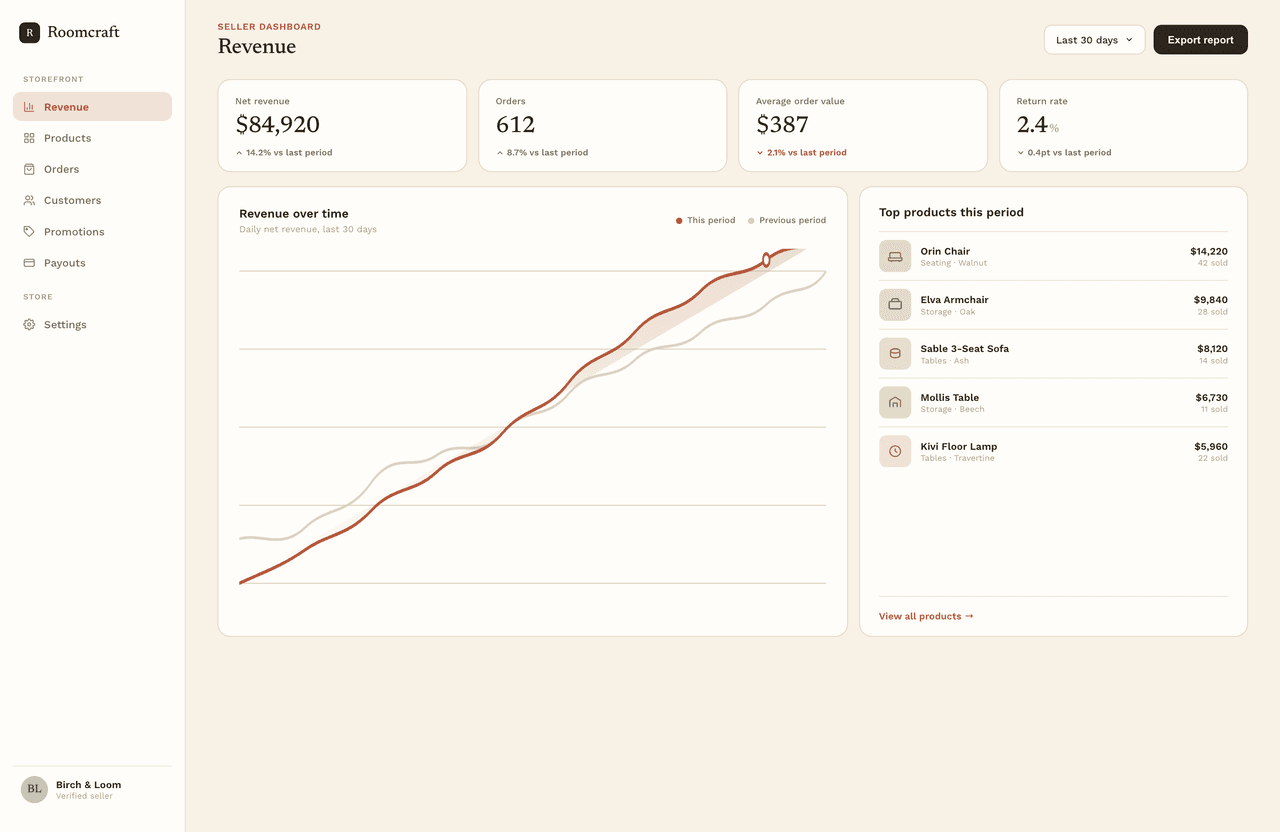
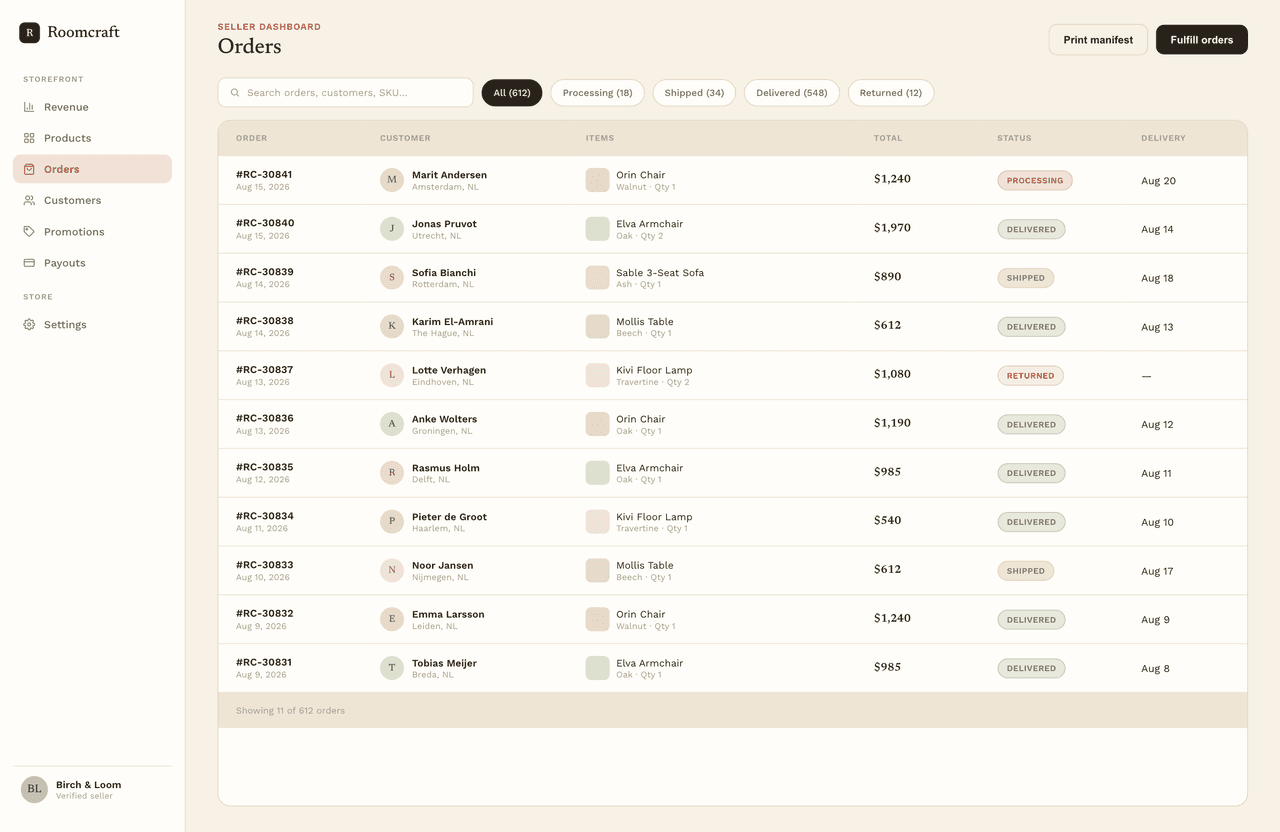
Revenue, orders and product management for every maker storefront — the operational half of a two-sided marketplace.
A single warm, editorial design language carried from the AI designer through the product catalog to the seller's revenue chart.
“The AI designer had to feel like styling advice, not a chatbot with a shopping cart bolted on — recommend three pieces that actually belong together, not thirty that might.”