Larkspur Property replaces the spreadsheet, the inbox and the group text with one system — a portfolio dashboard, a maintenance queue, rent tracking and a tenant app — for a landlord running 212 units across 34 properties.
A landlord running a few dozen units doesn't run a company big enough for enterprise property-management software, and doesn't run one small enough to keep everything in their head either. So it runs on whatever's fastest to set up: rent tracked in a spreadsheet only one person can really read, maintenance requests that come in by text, by call and on a sticky note stuck to a monitor, in no particular order, and a property's history that lives nowhere but a manager's memory. It holds together until a new hire starts from zero, a tenant can't get an answer about their own lease, or a spreadsheet formula quietly breaks and nobody notices for a month.
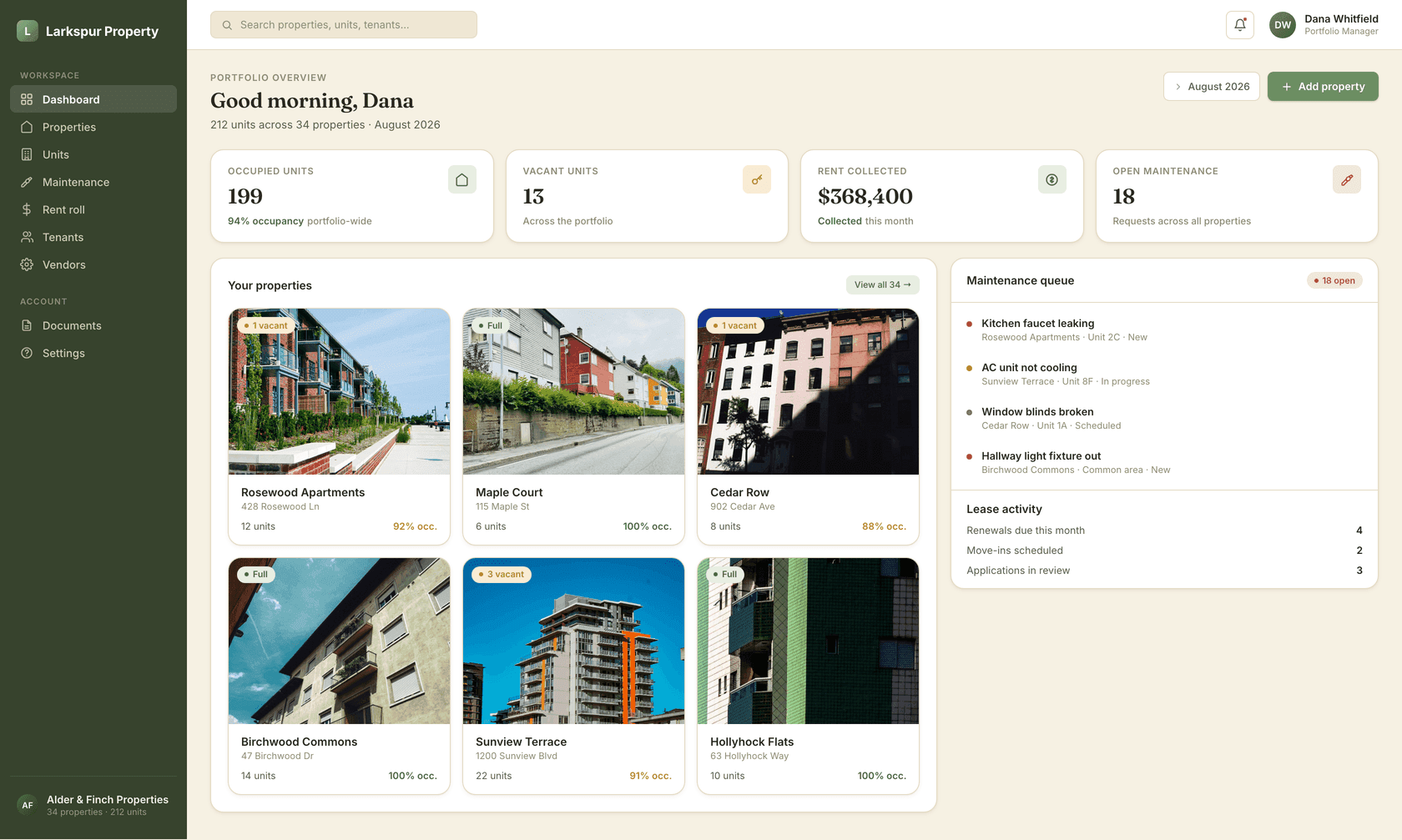
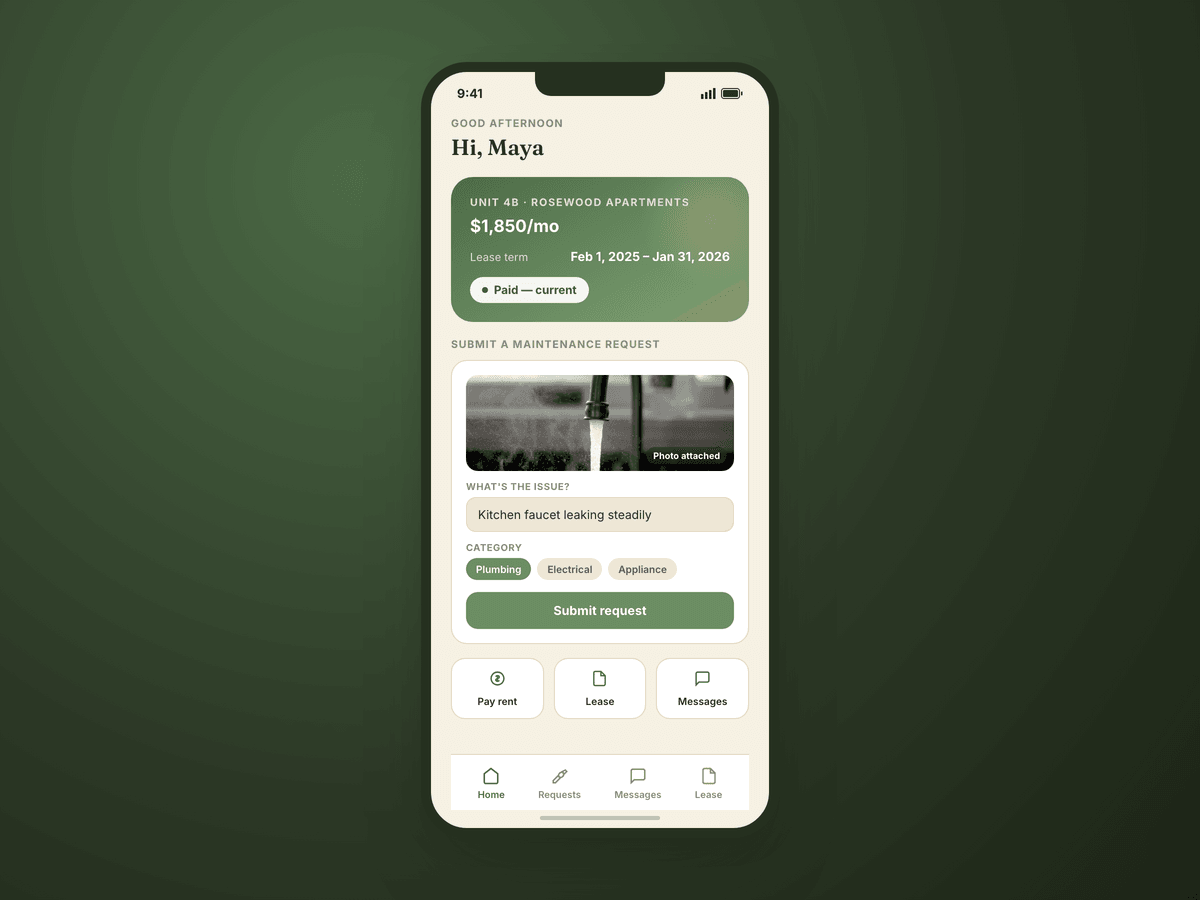
Larkspur Property is built around the opposite bet: that the same discipline enterprise operations software brings to a much larger company can run a smaller, much more human-scale portfolio too, without feeling like enterprise software. A portfolio dashboard that puts occupied units, vacant units, rent collected and open maintenance in one glance, with the actual buildings shown as photos, not a table of addresses. A maintenance queue as the signature screen — New, In Progress, Scheduled — because a landlord doesn't open this app to admire a chart. A rent roll that shows collected against outstanding by property, not just one number for the month. And a tenant app, the one surface built for the other side of the relationship, where a tenant can check their lease, see their balance and attach a photo to a maintenance request instead of guessing whether a text made it through.
We designed and built Larkspur Property in house — the portfolio dashboard, maintenance queue and financials, plus the tenant app. It's deliberately the light-themed entry in this portfolio: sage green and warm cream against the darker, more technical register other builds in this set lean on, proof that our range extends beyond one visual language.
Occupied units, vacant units, rent collected and open maintenance in one glance — plus a photo-forward property grid, not a table of addresses.
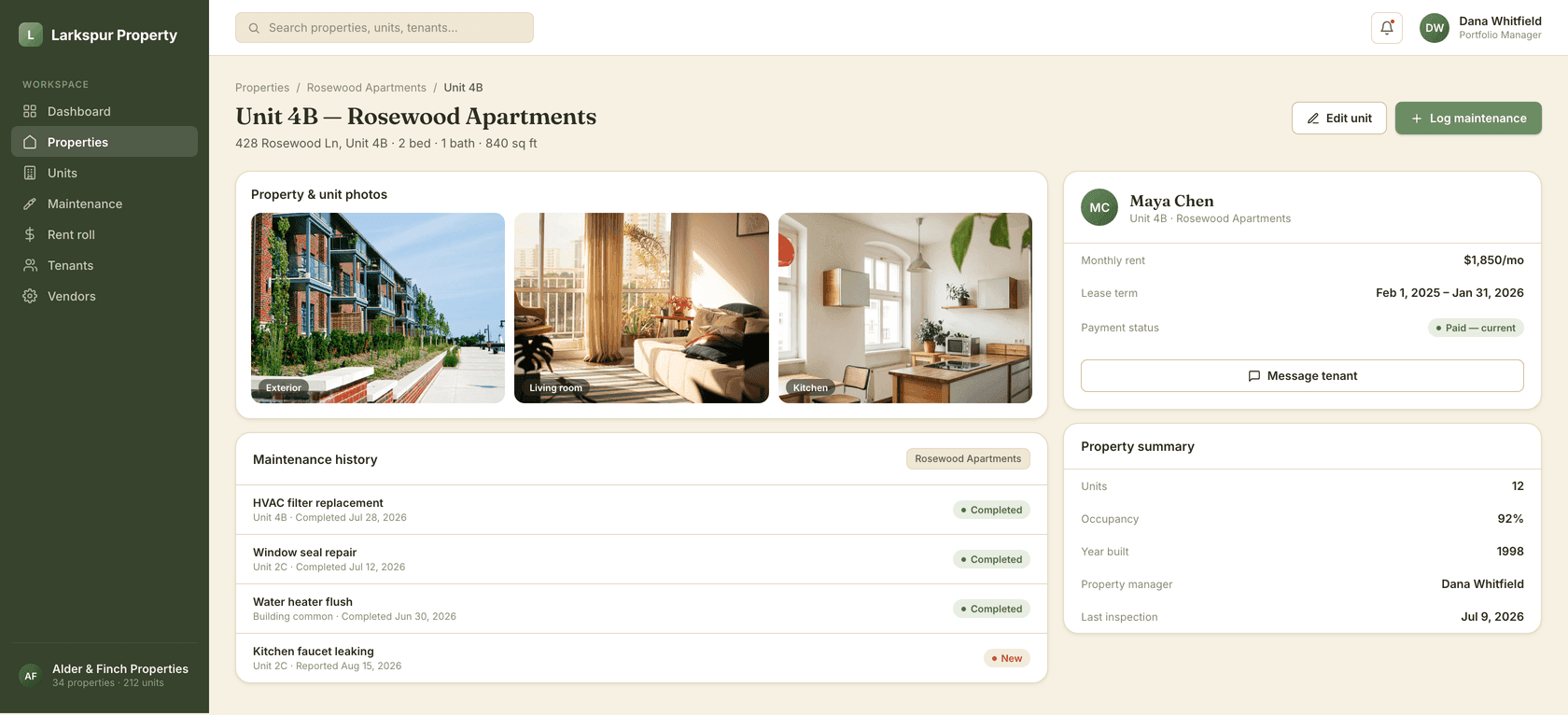
Every unit's photos, current tenant, lease dates and rent status in one place, with the maintenance history that came before it.
A real request board — New, In Progress, Scheduled — with a photo, a vendor and a property attached to every card, not just a ticket number.
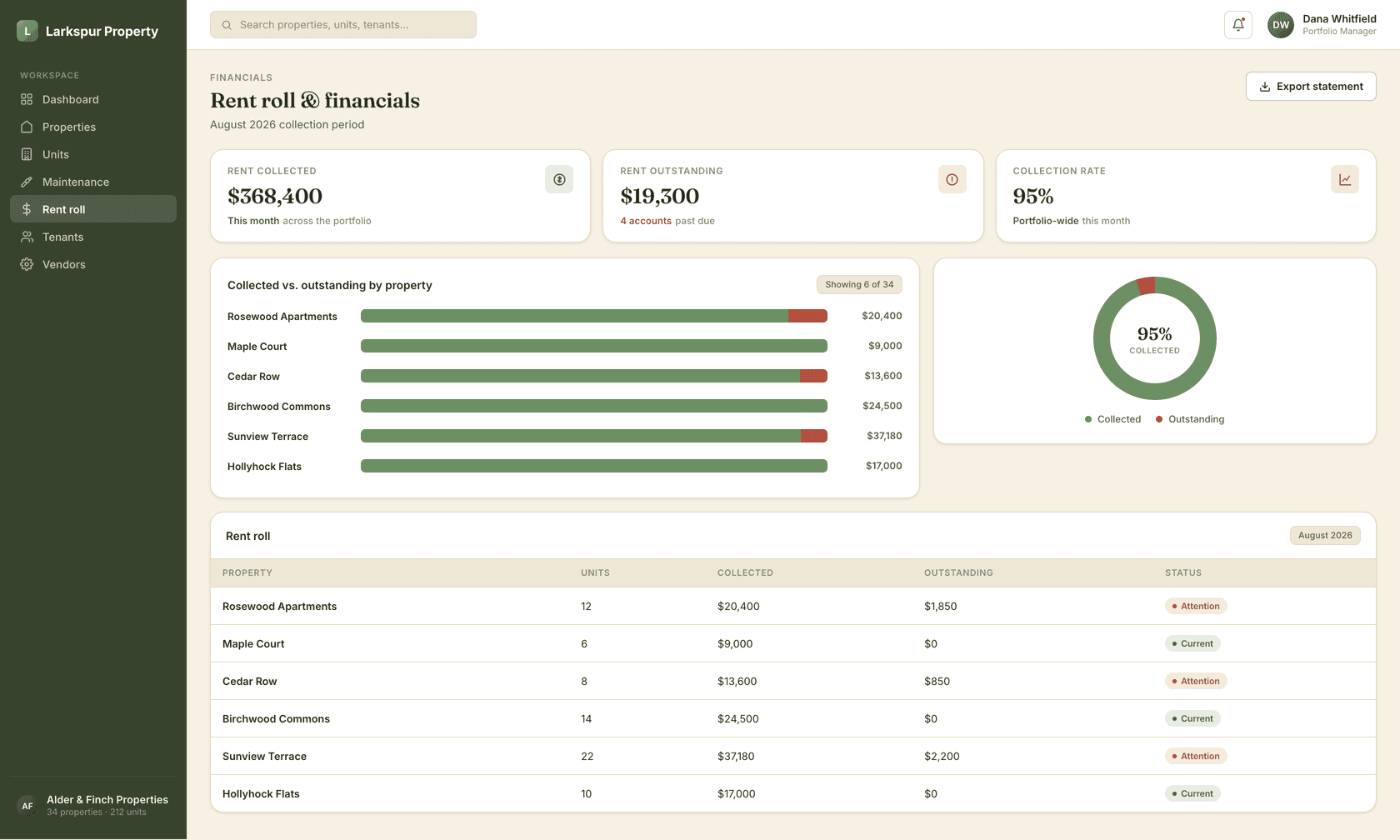
Collected versus outstanding, broken down by property, with the one number a landlord actually checks first: what's still owed.
The one tenant-facing surface: submit a maintenance request with a photo, check the lease and see the balance, without a phone call to the office.
34 properties and 212 units modeled as real data from the first screen — an actual landlord's portfolio, not a two-unit demo.
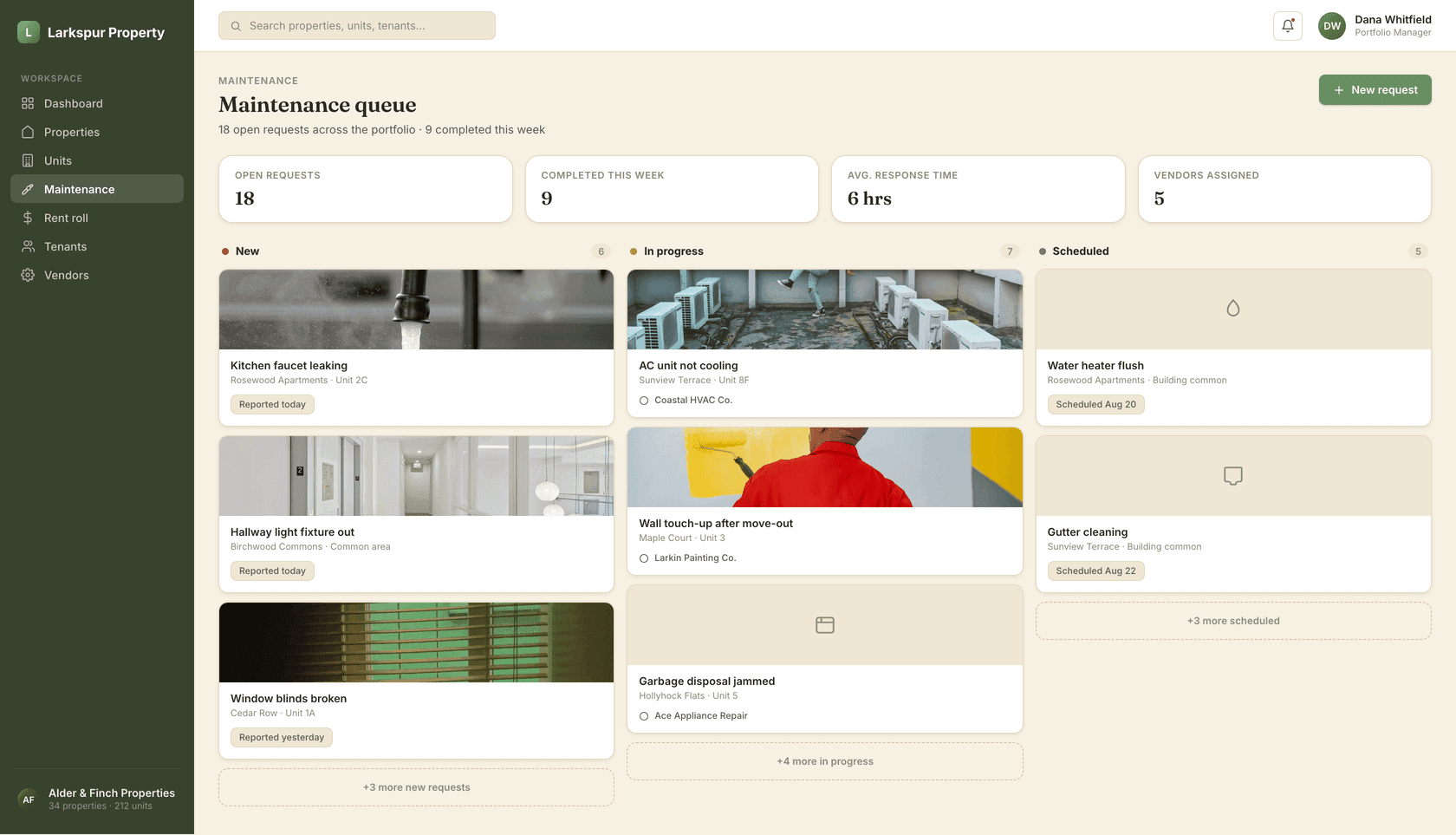
“The maintenance queue had to be the screen that actually earns its keep — a landlord doesn't open this app to admire a dashboard, they open it to see what's on fire.”